
Tag: faith

  • Show Me Your Glory

    Moses said, “Please, show me Your glory.” (Exodus 33:18)

    I have been dwelling on this verse for some time.

    Not because I compare myself to Moses, but because I want to pursue God, all of Him, with all my being. And seeing His glory is, perhaps, the deepest longing of every heart that truly seeks Him.

    So I asked Him.

    With fear, wonder, and curiosity, I prayed, “Lord, please show me Your glory.”

    It became an ongoing conversation between God and me. Almost daily, I sensed Him asking, “Do you want to see My glory?” And I would answer, “Yes.”

    One night, I pushed a little further.

    “What would it take to see Your glory?”

    Two verses came to mind:

    “Blessed are the poor in spirit, for theirs is the kingdom of heaven.”
    Matthew 5:3

    And,

    “Blessed are the pure in heart, for they shall see God.”
    Matthew 5:8

    From where I was, I knew this was not possible. I am neither poor in spirit nor pure in heart by God’s standard.

    But perhaps that is part of the point.

    When Jesus preached the Sermon on the Mount and spoke the Beatitudes, He was not giving us a ladder by which we could climb our way to God. He was revealing the holiness of God and the impossibility of attaining it by our own efforts. Left to ourselves, none of us are pure in heart.

    That is why Jesus said,“Do not think that I have come to abolish the Law or the Prophets; I have not come to abolish them but to fulfill them.” Matthew 5:17

    He fulfilled what we never could. In Christ, we receive what we cannot earn; His forgiveness, His righteousness, His grace.

    Then, Sunday came.

    I was teaching a Sunday school class of nine-year-olds. It was an ordinary day, and yet it was not ordinary at all.

    The children were exceedingly joyful. They played together, laughed together, welcomed one another, cared for each other, and an overwhelming peace; quiet and indescribable, rested among them.

    There was no striving. No drama. Just love, joy, kindness, and peace.

    I went home thinking about how perfect, and yet how strange, the day had been.

    Then a thought suddenly struck me.

    The glory of God is seen among His people.

    Yes, that was it!

    I finally understood.

    I had been looking for God’s glory in the way He appeared in the Old Testament; in fire, cloud, thunder, and overwhelming displays of His presence.

    But in Christ, under the New Covenant, God’s glory is revealed in another way.

    Jesus prayed to the Father, “The glory that You have given Me, I have given to them” John 17:22

    And Paul wrote that Christ will be “glorified in His saints” 2 Thessalonians 1:10.

    The glory of God is seen when Christ is reflected in His people.

    In the following days, I saw more and more of God’s glory in His people.

    In a child who welcomes another child. In forgiveness freely given. In quiet acts of kindness. In love that does not seek its own way.

    In people who bear the likeness of Jesus.

    Moses longed to see God’s glory, and God revealed His goodness to him.

    Today, we behold the glory of God in the face of Christ, and as we behold Him, we are being transformed into His image.

    That Sunday, in a room full of laughing children and a peace that words cannot fully describe, God answered my prayer.

    “Do you want to see My glory?”

    Yes, Lord.

    And by His grace, I did.
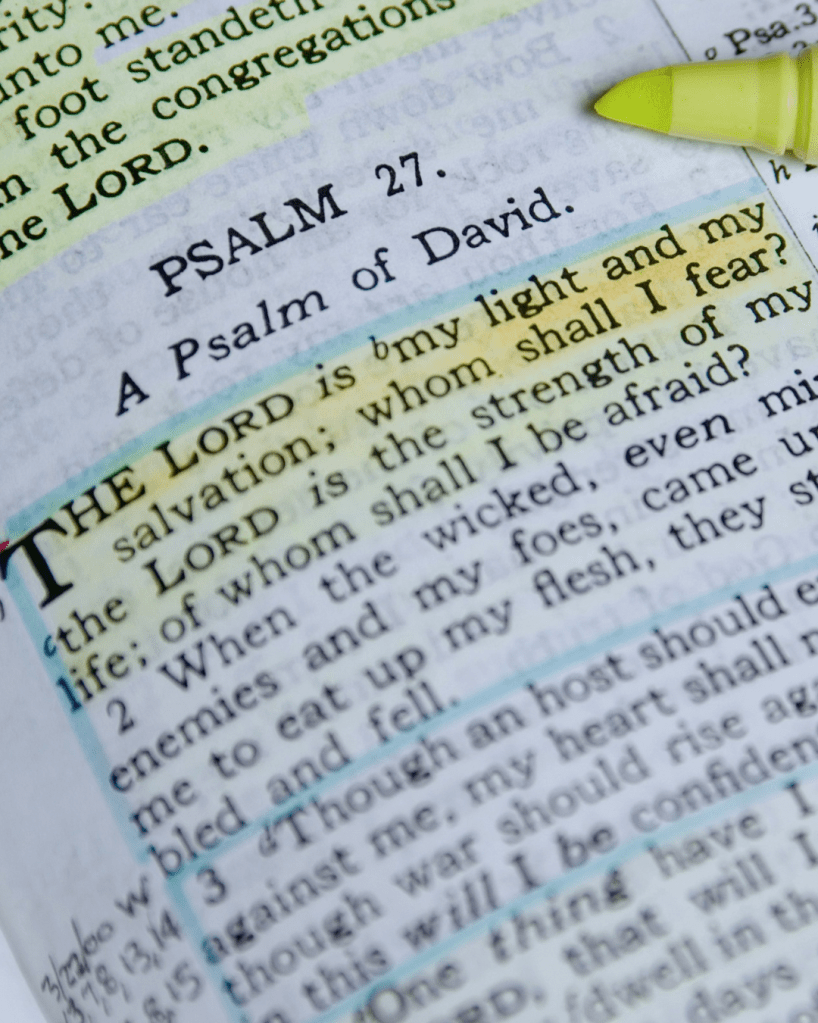
  • Not Always About Efficiency

    In marketing, our thought process is always geared towards making things better; improving systems, automating what we can, and increasing efficiency. And unknowingly, I have often carried this thinking into ministry.

    Recently, I wanted to start a Bible group study for women. My automatic thinking went straight into efficiency. If I were to teach for an hour, it would be best if it’s a small group of women coming together – best use of time and energy.

    But I felt the Lord telling me to go back to basics: one-on-one Bible study.

    He reminded me that Kingdom value is not always about efficiency.

    If God’s Kingdom is driven by efficiency, the cross would never make sense.

    The cross is, by every human measure, deeply “inefficient.” Thirty years of hidden life for a public ministry of only three. A slow journey toward suffering, betrayal, humiliation, and death. No apparent productivity model that makes sense to human systems thinking.

    But the cross is not inefficient. It is necessary.

    Because redemption is about sacrifice. It is love satisfying justice. It is about God Himself entering human brokenness to heal it from within.

    “Efficient salvation” would have been impossible, because sin is not a systems problem. It is a heart problem. And it requires not a process, but a Person. Not optimization, but incarnation. Not delegation, but self-giving.

    We had our first one-on-one session, and it was nothing short of amazing. Simple. Two women sharing life, reading the Word, and letting the Spirit lead.

    I’m excited to be reminded that the Kingdom is not built on efficiency. It is built on love that is willing to go the long way, the costly way, the cross-shaped way.

  • The Word Became Flesh and Dwelt Among Us

    The more I ponder John 1:14, the more I am left in awe. Words begin to fail me at what God has done for humankind.

    The Word became flesh and dwelt among us.

    Why would a God who existed before beginning began, who created time and eternity, the cosmos and galaxies, choose to clothe Himself in human flesh and live among us?

    The mystery is almost unbearable in its beauty. The infinite stepping into the finite. The Creator entering creation. Not from a distance, but close enough to be seen, touched, known.

    The word dwelt in the original Greek is σκηνόω (skēnoō). It literally means to pitch a tentto tabernacleto take up residence. This is not the language of a passing visit. It is the language of presence.

    He entered our dust and our days, our meals and conversations, our friendships and fatigue.

    A God who makes His home among us, inviting us through Christ into communion with Him.

    This is the greatest event in history. The moment when eternity stepped into time.
    When God did not merely speak to humanity, but came to dwell with us.

    And this is why every human heart should take heed. Every ear should lean in and listen.

    For this is not simply a story of the past, but a declaration of what God has done, for us. A God who draws near. A God who enters our world so we might draw into Him, our source of true life.

    The Word became flesh.
    And nothing has been the same since.

  • When Moms Become Marthas

    “I’ll relax after I finish cleaning” vs. “Let me relax first before I start cleaning.”

    There’s a trend going around comparing spouses personalities. A simple meme started a discussion among my friends, and one thing we all agreed on; most of us became Marthas after becoming moms.

    From planning to prepping to executing #momlife and household duties, the to-do list never ends. Even with automations and reminders, it still feels like we’re always playing catch-up. But deep down, we know we’re called to prioritize what truly matters first and foremost, the Lord.

    That’s why I was delighted when I came across this article by Our Daily Bread, Biblical Wisdom for Parents addressing this tension between being a “Martha” and a “Mary.”

    “Martha, Martha,” the Lord answered, “you are worried and upset about many things, but few things are needed or indeed only one.
    Mary has chosen what is better, and it will not be taken away from her.”

    (Luke 10:41–42)

    Big idea from the article is that Mary and Martha weren’t in opposition but in tension. Jesus wasn’t rebuking Martha’s service, but her stress. The lesson is not to stop serving, but to serve from a place of abiding, not anxiety.

    The conclusion? We’re invited to be both.

    So, to all the Martha moms out here (myself included), here are some key takeaways and life applications:

    1. Our “many things” must be rooted in “the one thing”

    Motherhood constantly demands our attention; from school communications and toddler tantrums to the dishes in the sink, the growing pile of laundry, and late-night feedings. The to-do list never ends.

    But when we chase after everything without pausing for “the one thing”, sitting at Jesus’ feet, we eventually burn out.

    Jesus gently reminded Martha, “You are worried and upset about many things, but few things are needed or indeed only one.” (Luke 10:41–42)

    In our Martha-like moments, let’s not forget the Mary invitation:
    To be still. To listen. To rest in Him.

    How to apply:

    • Start your day with just 1 verse and 1 prayer.
      Example: Psalm 46:10 “Be still, and know that I am God”.

    Reminder: Don’t chase perfection. Chase presence.

    2. Martha was distracted, not wrong

    Martha’s service was good but she let it distract her from what mattered most.
    In today’s terms, Martha could be the “default parent,” or the one who couldn’t relax until everything was done. Sound familiar? We’re not doing anything wrong but when distraction replaces devotion, our soul gets noisy.

    How to apply:

    • Create mini Mary moments in your day (e.g., when washing dishes, say thank-you prayers; during school drop-off).
    • Set an alarm on your phone midday or anytime, just to stop and breathe in God’s presence.
    • Turn chores into worship: play worship music while you clean or meal prep.

    3. Jesus wasn’t condemning. He was inviting

    The tone in Luke 10 isn’t condemnation; it’s a loving redirection: “Martha, Martha…” He sees you, He understands.
    God isn’t asking moms to choose between spiritual or practical. He’s inviting us to do both, but with peace. It’s about His presence in our day.

    How to apply:

    • Reflect weekly: What’s one area where I’m striving in stress instead of serving in peace?
    • Say “yes” to help. Let others carry part of the load so you can rest and reset.

    Reminder: Replace guilt with grace. Missing devotion time doesn’t “cancel” our day. It reminds us to return.

    Points to ponder:

    1) How do you see yourself; more like Martha or Mary lately?

    2) Am I serving from a place of overflow or overwhelm?

    3) What would it look like to invite Jesus into my daily rhythms?

    We were never meant to carry it all alone.

    Jesus doesn’t ask us to serve from exhaustion. He calls us to serve from overflow. And that overflow starts when we take time to sit at His feet, even if it’s just for five quiet minutes.