
Tag: love

  • When Moms Become Marthas

    “I’ll relax after I finish cleaning” vs. “Let me relax first before I start cleaning.”

    There’s a trend going around comparing spouses personalities. A simple meme started a discussion among my friends, and one thing we all agreed on — most of us became Marthas after becoming moms.

    From planning to prepping to executing #momlife and household duties, the to-do list never ends. Even with automations and reminders, it still feels like we’re always playing catch-up. But deep down, we know we’re called to prioritize what truly matters first and foremost—the Lord.

    That’s why I was delighted when I came across this article by Our Daily Bread, Biblical Wisdom for Parents addressing this tension between being a “Martha” and a “Mary.”

    “Martha, Martha,” the Lord answered, “you are worried and upset about many things, but few things are needed—or indeed only one.
    Mary has chosen what is better, and it will not be taken away from her.”

    (Luke 10:41–42)

    Big idea from the article is that Mary and Martha weren’t in opposition but in tension. Jesus wasn’t rebuking Martha’s service, but her stress. The lesson is not to stop serving, but to serve from a place of abiding, not anxiety.

    The conclusion? We’re invited to be both.

    So, to all the Martha moms out here (myself included), here are some key takeaways and life applications:

    1. Our “many things” must be rooted in “the one thing”

    Motherhood constantly demands our attention; from school communications and toddler tantrums to the dishes in the sink, the growing pile of laundry, and late-night feedings. The to-do list never ends.

    But when we chase after everything without pausing for “the one thing”—sitting at Jesus’ feet—we eventually burn out.

    Jesus gently reminded Martha, “You are worried and upset about many things, but few things are needed—or indeed only one.” (Luke 10:41–42)

    In our Martha-like moments, let’s not forget the Mary invitation:
    To be still. To listen. To rest in Him.

    How to apply:

    • Start your day with just 1 verse and 1 prayer.
      Example: Psalm 46:10 – “Be still, and know that I am God”.

    Reminder: Don’t chase perfection. Chase presence.

    2. Martha was distracted, not wrong

    Martha’s service was good but she let it distract her from what mattered most.
    In today’s terms, Martha could be the “default parent,” or the one who couldn’t relax until everything was done. Sound familiar? We’re not doing anything wrong but when distraction replaces devotion, our soul gets noisy.

    How to apply:

    • Create mini Mary moments in your day (e.g., when washing dishes, say thank-you prayers; during school drop-off).
    • Set an alarm on your phone—midday or anytime, just to stop and breathe in God’s presence.
    • Turn chores into worship: play worship music while you clean or meal prep.

    3. Jesus wasn’t condemning. He was inviting

    The tone in Luke 10 isn’t condemnation; it’s a loving redirection: “Martha, Martha…” He sees you, He understands.
    God isn’t asking moms to choose between spiritual or practical. He’s inviting us to do both, but with peace. It’s about His presence in our day.

    How to apply:

    • Reflect weekly: What’s one area where I’m striving in stress instead of serving in peace?
    • Say “yes” to help. Let others carry part of the load so you can rest and reset.

    Reminder: Replace guilt with grace. Missing devotion time doesn’t “cancel” our day. It reminds us to return.

    Points to ponder:

    1) How do you see yourself; more like Martha or Mary lately?

    2) Am I serving from a place of overflow or overwhelm?

    3) What would it look like to invite Jesus into my daily rhythms?

    We were never meant to carry it all alone.

    Jesus doesn’t ask us to serve from exhaustion. He calls us to serve from overflow. And that overflow starts when we take time to sit at His feet—even if it’s just for five quiet minutes.
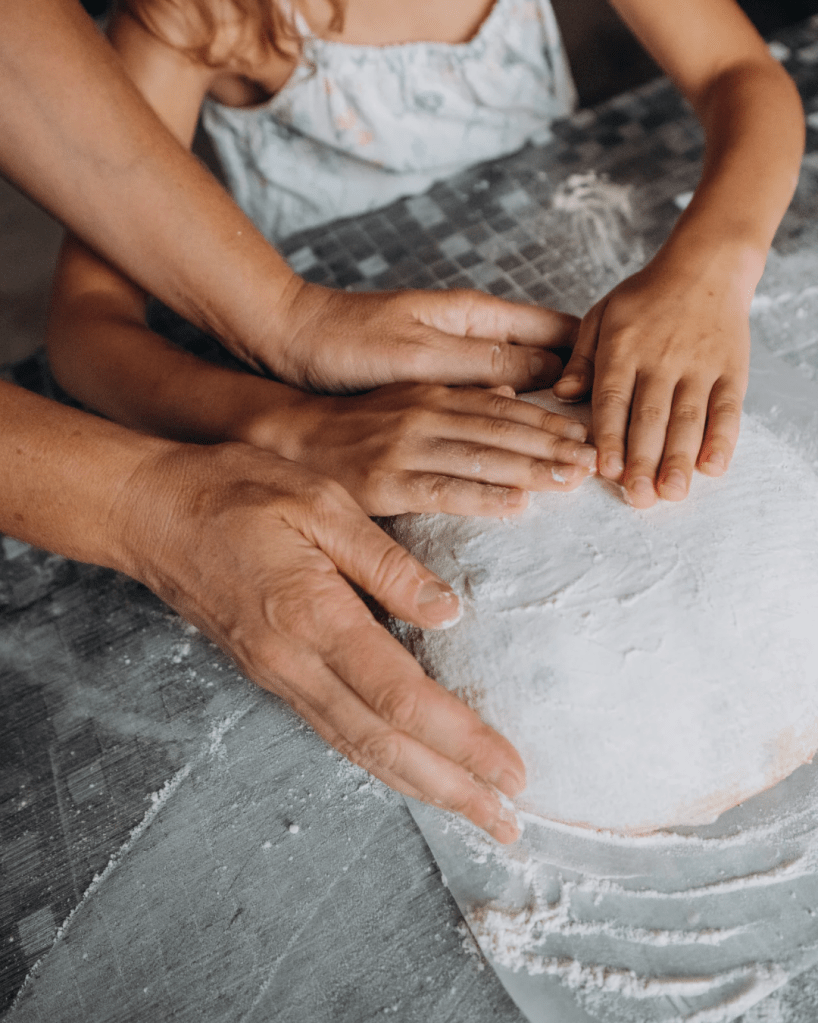

  • Motherhood Tug Of War

    Motherhood- a constant inner struggle between the desire to protect and empower.

    As a mom, I am often torn between wanting to do things for my kids, just a little longer and feeling the growing weight of knowing they are old enough to handle things on their own.

    I recently came across an article from Christianity Today that resonated deeply with me. Two key points stood out that shed light on how this struggle fits within the broader picture of our calling as mothers.

    God Gives Us the Power to Make Choices

    The article highlighted a powerful truth: God gives us power to make choices that impact our lives (Romans 2:1,6). As parents, we are tasked with making countless decisions every day on behalf of our children, from what they eat to the values they learn. We guide them, but we also prepare them to make choices for themselves.

    As mothers, it’s easy to slip into the mindset of doing everything for our children, wanting to protect them from any possible failure. But there’s a tension in this. God gives us free will because He trusts us to use it wisely. In the same way, it’s important for us to allow our children to have a say in their lives. We must trust them with their own choices even when they make mistakes because this is how they learn and grow.

    Bearing God’s Image and Our Responsibility to Community

    Another profound insight from the article was the dignity of bearing God’s image (Genesis 1:26-28). As parents, we have the privilege and responsibility to help shape children who reflect God’s character in our communities and the world.

    We are raising future adults, neighbors, leaders, and members of a community. This means our decisions have a ripple effect far beyond the walls of our home.

    So, every choice we make—whether it’s letting them spill the milk or empowering them to handle challenges—shapes the kind of adult they will become.

    What Does This Mean for Moms?

    If like me, you’re feeling like you’re constantly caught between wanting to do everything for your kids and knowing you need to let them go, here are a few thoughts that can help guide your journey:

    Letting Go is Holy Work
    Our desire to hold on just a little longer isn’t wrong. It’s a reflection of love. But it’s important to remember that the goal is to raise children who can stand on their own. God, in His grace, doesn’t suffocate our choices but empowers us to grow. In the same way, we’re called to help our children grow into independent, capable adults.

    Parent with Purpose
    Every decision we make should empower our children. The act of parenting forward – giving our kids space to make their own decisions and live with the consequences isn’t just an act of love; it’s an act of faith. Trust that our children are capable of growth, and believe in their ability to rise to the occasion.

    Grieve the Letting Go, But Celebrate the Growth
    It’s okay to feel sadness as our children become more independent. Letting go is hard. But we are not withdrawing love; we are creating room for them to reflect God’s image in their own unique way. This is a sacred part of motherhood: letting them flourish on their own, knowing you’ve done your part in guiding them.

    Mirror God’s Love
    The ultimate example of love is God’s relationship with us. He gives us freedom to make our choices, but He never leaves us. As a mother, we have the unique calling to mirror that balance of presence and freedom. We’re always there to support them, but we also trust them to walk with God independently.

    Final thoughts, motherhood is a divine partnership, where we are given the incredible responsibility of helping to shape future adults who bear the image of God. As we navigate the complex emotions of letting go, remember that it’s not a loss but a gain—for us, for our children, and for the world.

  • 8 Strips Of Paper

    It was 2006, and I was in a season of turmoil—standing at the crossroads of chasing my ambitions and seeking God’s purpose for my life. I wrestled with where my own desires ended and where His calling began.

    During that time, I was reading The Purpose Driven Life by Rick Warren and A Woman After God’s Own Heart by Elizabeth George. One night, I tore a page from my notebook and wrote down eight things I needed God to help me with—each on a strip of paper.

    In no particular order, my list read:

    To be godly feminine

    To be alone but not lonely

    To be a better steward of money

    To be a better steward of time

    To learn to live in a Christian community

    To find a life partner

    To have more faith in Him

    To have more courage

    I folded the eight strips of paper and placed them in a shoebox. A few months later, I opened the box to revisit my list. Nothing had changed.

    A year later, on my birthday, I opened the box again. Not much had happened, except one thing: I realized I was no longer as lonely when I was alone.

    At the end of 2007, I made a bold decision—to leave the corporate world and become a full-time seminary student. It meant living on campus for at least a year, without a stable income. It was a scary step. (The initial one year became three years).

    A year into seminary life, I opened the shoebox again. This time, I found that almost every prayer had been answered:

    I was learning to be godly feminine.

    I have learned to live in a community of believers.

    With no regular income, I learned to steward both time and money with discipline.

    My faith was growing. So was my courage.

    All except one—“to find a life partner.”

    But God wasn’t done. I met him in seminary. He was a fellow student, also following God’s call. We became friends, then more. Two years after I graduated, we got married. The final prayer in the shoebox was answered.

    Blessings Come After Obedience

    My journey reminded me of Abraham.

    In Genesis 12, God gave Abraham a command:
    “Go from your country, your people and your father’s household to the land I will show you.”
    (Genesis 12:1, NIV)

    God didn’t give Abraham a detailed plan. There was no map, no itinerary.

    But God let him know the blessings he would receive if he chose to obey God.
    “I will make you into a great nation, and I will bless you… and all peoples on earth will be blessed through you.”
    (Genesis 12:2–3)

    So, Abraham obeyed and he went.

    The blessings didn’t come before Abraham moved—they came after his obedience. That’s the pattern we see throughout Scripture. When we obey and take the step of faith, even when we can’t see the whole picture, God responds. He transforms us in the process.

    And so, I leave you with this simple reminder:
    that blessings come after obedience.
    Not instantly. Not always the way we imagined. But always, in God’s time and way.